Why I don’t recommend label reading apps as a Celiac Dietitian.
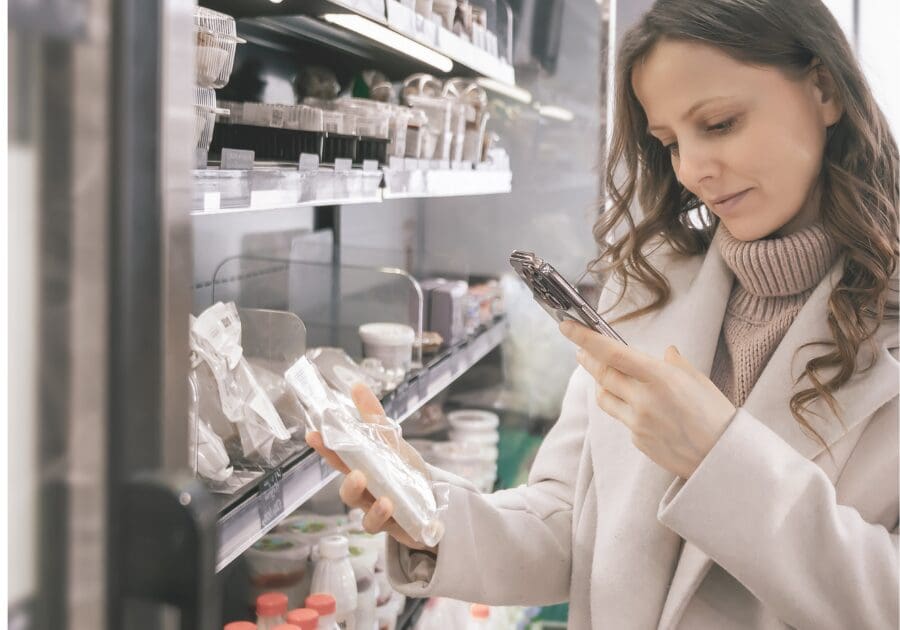
In my work as a dietitian specializing in Celiac Disease, I frequently see label reading apps recommended as a go-to tool for navigating the gluten-free diet.
At first glance, they seem incredibly helpful. Scan a barcode, get a quick answer, and move on with your day. For someone newly diagnosed with Celiac Disease, or simply overwhelmed by ingredient lists, it can feel like a lifesaver.
But as a dietitian who specializes in Celiac Disease, I don’t recommend relying on label reading apps as your primary tool.
Let’s talk about why.
The Problem with Label Reading Apps
Label reading apps are built on databases. That means the information they provide is only as accurate, and as current, as the data stored within them.
And that’s where things start to break down.
1. Product formulations change, often without notice
Food manufacturers can change ingredients at any time. A product that was gluten-free last month may not be today. Apps don’t always reflect these changes in real time, which can create a false sense of security.
2. It’s unclear how frequently apps are updated
Most apps don’t clearly communicate how often their databases are reviewed or updated. That means you may be relying on outdated information without realizing it.
3. Not all products are included
Smaller brands, new products, or regional items may not even exist in the app’s database, leaving gaps in coverage.
4. Apps can’t interpret nuance the way you can
Label reading for Celiac Disease isn’t just about spotting “wheat.” It involves understanding:
- Ingredient lists
- “Contains” statements
- Voluntary allergen or cross-contact statements
- Context around manufacturing practices
Apps often simplify this into a “yes” or “no,” but the reality is more nuanced.
The Bigger Concern: Outsourcing a Critical Skill
Beyond the technical limitations, there’s a deeper issue.
Label reading is not just a task, it’s a core self-management skill for living safely with Celiac Disease.
When we rely heavily on apps, we risk outsourcing that skill.
And while that might feel easier in the moment, it can leave you vulnerable in situations where:
- The app doesn’t have the product
- The information is incorrect or outdated
- You’re traveling or navigating unfamiliar foods
Building confidence in your own ability to read and interpret labels is one of the most empowering things you can do.
I Understand…Label Reading Can Feel Overwhelming
If you’ve ever stood in the grocery store staring at a label thinking, “I have no idea what I’m looking for,” you are not alone.
Label reading can feel:
- Confusing
- Time-consuming
- Mentally exhausting
And to be honest, I agree that labeling laws could do more to protect and support people who need to be gluten-free.
But until those systems improve, your knowledge is your best protection.
What I Recommend Instead
Rather than relying on apps, I encourage my clients to focus on building confidence with label reading itself.
This includes learning how to:
- Identify obvious and hidden sources of gluten
- Recognize that gluten isn’t just wheat, it also includes ingredients derived from rye and barley
- Understand “Contains” statements
- Recognize when voluntary statements (like “may contain” or “processed in a facility…”) matter for your personal risk tolerance
- Double-check products, even ones you’ve purchased before
The Bottom Line
Label reading apps can be convenient, but they are not foolproof.
When it comes to managing Celiac Disease, accuracy matters. And the most reliable, up-to-date information will always be on the package in your hands.
Learning how to read and interpret that information isn’t just a skill, it’s a form of self-trust and self-protection.
A Gentle Reminder
If label reading still feels overwhelming, that doesn’t mean you’re doing anything wrong.
It just means you haven’t been taught how to do it yet.
And that’s something you can learn.
Absolutely—here’s a natural, supportive way to extend that ending without making it feel too sales-heavy:
A Gentle Reminder
If label reading still feels overwhelming, that doesn’t mean you’re doing anything wrong.
It just means you haven’t been taught how to do it yet.
And that’s something you can learn.
If you’re ready to feel more confident in reading labels and managing your gluten-free lifestyle, you can schedule a free consultation call to see if working together is the right fit.
If you’re ready to feel more confident in reading labels and managing your gluten-free lifestyle, I’d love to support you. You can schedule a free consultation call here to see if working together is the right fit.
Check out my other Celiac Disease Awareness Month Posts:
Want More Celiac Education and Gluten-Free Living Tips?
If you’re navigating life with Celiac Disease, you don’t have to do it alone. When you join my email list, you’ll receive practical education, gluten-free living tips, and supportive resources designed to help you feel confident and safe.
Find more gluten-free resources, restaurant reviews, and tips here.